Monday, June 11, 2012

The Haddam House

On the way to Old Saybrook yesterday, we stopped at Haddam to see the Nehemiah Brainerd House, which was built around 1765, and which Kay owned from 1932 until some time in the early 1940s. Kay moved the house some 400 feet back from the road, creating quite a sweep of front lawn, and had the house enlarged with the addition of two wings.

After years of neglect, the house was purchased by Maryan and Jeff Muthersbaugh in 2002, who have lovingly restored the house, retaining as much period detail as possible--period detail that acknowledges both the the house's Colonial Heritage and its later Deco Era transformations.


Maryan and Jeff started operation of The Nehemiah Brainerd House B&B three or four years ago. They are two of the nicest people you'll ever meet, and, despite a houseful of company, they were so sweet to give us a tour of the entire house, and part of the lovely property.

The Connecticut River is hidden
from view during summer months

Perhaps the most charmingly alluring feature of the Inn is the cottage, which has its own kitchen and bath (recent additions by Maryan and Jeff), and a commanding view of the Connecticut River, which was mostly hidden by the lush foliage when we visited. It's not clear if the cottage was there in Kay's time (it doesn't appear on the blueprints of the house and property), but Maryan and I like to think that Kay may have used it as a studio, where she could write in quiet solitude... 

Dennis, Gloria, and Maryan on the cottage patio

The cottage was chosen by Yankee Magazine as Editors' Choice Best of New England, Best Hilltop Cottage for 2011.


Sunday, June 10, 2012

RIP, KB

Today was the 60th Anniversary of Katharine Brush's death. A few friends and I drove up to Old Saybrook, Connecticut to visit Kay's grave in Riverside Cemetery.


Kay's ashes are buried next to her parents, and her brother Travis.


KATHARINE LOUISE INGHAM BRUSH

August 15, 1900-June 10, 1952


Monday, June 4, 2012

Urban Oasis

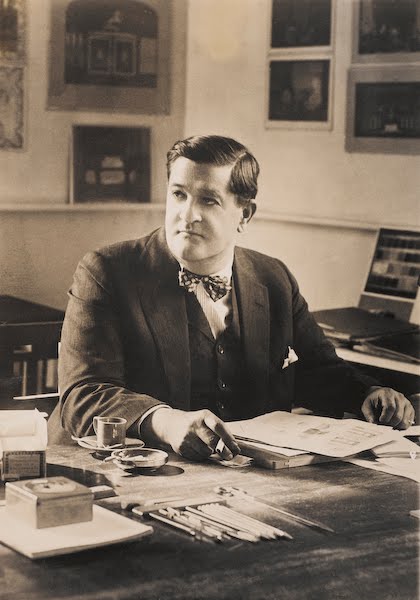
Joseph Urban
Kay's sumptuous (9 rooms, 5 baths) duplex on East 57th Street was the last interior design work of Joseph Urban, the famous Austrian architect and designer who had emigrated to the US in 1912. The Hearst International Building (with later additions by Norman Foster) and the auditorium of the New School are two of his architectural projects that can still be seen in New York today. Urban also designed productions for the Ziegfeld Follies and the Metropolitan Opera. Joseph Urban died shortly before work on Kay's apartment was completed. He's buried in Sleepy Hollow Cemetery.


The two-story living room was 30 feet by 40 feet!


Most of the furniture was custom-built to Urban's designs.


Sunday, May 6, 2012

The Last Word

Kays last two books amount, rather sadly, to little more than an addendum, a footnote to a career that was ofttimes marked by huge popularif not critical—success.


Out of My Mind from 1943 is a collection ofwhat, exactly? Observations, musings, and vignettesabout life and love and aging and language and Christmas and travelthat had previously been published in magazines such as The New Yorker, Good Housekeeping, and Readers DigestAnd War. More than a few of the pieces are about War. Not surprising, given the time. 

Most of the pieces seem dated and irrelevant today, but the best of them have a certain timelessness about them:


It's New York. It's the town that out-of-towners wouldn't live in if you gave it to themand neither would New Yorkers, as far as that goes. Not if you gave it to them. What they like is paying and paying and paying. That's obvious. ("Bronx Cheer For Manhattan")

There is no proper day or date for mailing out your Christmas cards, and no matter when you do it, you'll be wrong. Here we have a problem which—though annual and universal—has never been solved by anybody in the history of man. For if you mail your greetings late, with a view to getting them there on Christmas Day, you are (a) burdening the post office, and (b) giving the recipients the impression that you only remembered to address a card to them after their card came. Whereas, if you mail early, it's just the reverse, as everybody knows. In that case you will never be sure whether the influx of greetings that you yourself receive at the last minute is truly affectionate, or merely dutifully reciprocal. You will never (I repeat) be at all sure. But you'll suspect. ("Merry You-Know-What")


This Man and This Woman appeared in 1944 and gathered together four magazine stories, the earliest of which dated all the way back to 1936 (Free Woman, mentioned previouslyand which were now re-categorized as short novels.

Free Woman is probably the best of the lotwhat with Harriet Lansingwho seems so to have everythinglosing the one thing that matters most in the world to her in an ironic twist of fate. Kays best stories always end with an ironic twist.


And Two to New York has the glamorous and soigné atmosphere of vintage Brush, even if it is marred by an overly sentimentalized ending played out against a backdrop of the Pearl Harbor attack. But, hey, I wasnt around for Pearl Harbor, and I imagine it was as good an excuse for sentimentalized endings as ever there was.

This Man and This Woman does not, certainly, represent The Best of Katharine Brush. Writing in The Saturday Review, Sara Henderson Hay felt that, having already appeared in the pages of Good Housekeeping and Redbook, the stories would seem to have served their purpose. To put them into a book is a bit like trying to immortalize yesterdays omelette. I am sorry to say that I am inclined to agree.


This Man and This Woman was issued in two different dust jackets